Forgiveness and mercy
The SonForgiveness and mercy are not simple absolution in the novel: they involve acknowledging wrongdoing, choosing whether to spare another person, and accepting that change must ultimately be made by the person who has done harm. The idea binds together Simon Kefas’s recovery from gambling and corruption, his memories of being forgiven by Else, and Sonny Lofthus’s final decision to let Simon go. Against a world in which characters invoke punishment as a substitute for lawful justice, mercy offers a different possibility: not undoing harm, but refusing to make its repetition inevitable.
Mercy against punishment
Simon understands Sonny’s campaign as an effort to enact the justice his father, Ab Lofthus, had sought. He tells Martha that Ab believed the age of mercy had ended and the day of judgment had arrived, and that Sonny thinks justice must be carried out because the police protect criminals. Simon describes Sonny’s idea as justice above the law, identifying its moral appeal and its danger: punishment may seem necessary where institutions fail, but private judgment risks turning the avenger into another source of harm.
That conflict comes into focus when Sonny confronts a dying man who asks to say goodbye to his loved ones. The man invokes the mercy Ab showed when he wrote a note telling Sonny and his mother that he loved them. Simon calls out for Sonny not to grant the request, but the plea tests the very distinction between punishment and mercy that has shaped their lives. Sonny’s decision is not presented as a restoration of what was lost; the earlier wrong remains. Its significance lies in whether the present moment will become another act of vengeance.
Forgiveness and self-reform
The novel also connects mercy to the possibility of personal change, without treating another person’s love as a magical cure. Else recalls telling Simon that he knew how to love, while Simon credits her with having helped him. She corrects him: he chose to stop gambling. Her forgiveness mattered because it met his wrongdoing without driving him away or imposing an ultimatum, but the decision to change was his own.
Simon’s gambling had led him to mortgage their house behind Else’s back and lose the money. After she forgave him, shame extinguished the craving that had drawn him to gambling; he quit and never placed another bet. He understands that recovery as both personal and shared: Else’s response gave him room to face what he had done, while his own self-control and honesty made change possible. Their promise to tell each other everything became part of the trust they rebuilt. Simon’s later willingness to believe that criminals can receive a second chance stands in contrast to the harsher judgments his experience as a police officer might have encouraged.
Mercy, guilt, and betrayal
Simon’s history with Ab reveals the limits of forgiveness as a remedy for harm that cannot be reversed. During the banking crisis, Ab and Helene Lofthus were deeply in debt and feared losing their home. Simon had already made a criminal bargain with the Twin; he persuaded Ab to join him by invoking the consequences Ab’s son might face if the family remained poor. Simon later described this as a source of profound shame: he had drawn his closest friend into the same corruption that had compromised him.
The betrayal became fatal when Simon learned that Ab might kill him to take the sole place beside the Twin. He contacted the Twin and arranged for Ab to be eliminated, acting before Ab could act against him. Simon later repented, left his role as a police mole, and spent the rest of his life trying to make amends by pursuing corrupt officers. After Helene died, he believed he had nothing left to fear; he accepted loneliness as something he deserved rather than feeling sorry for himself. His account makes penitence an ongoing response to guilt, not proof that the damage has been repaired.
Release at the end
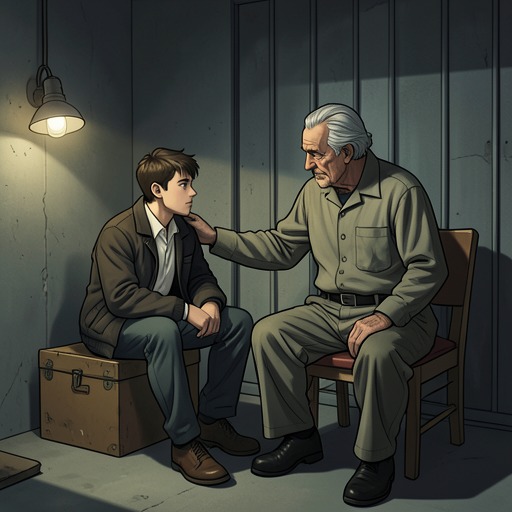
At the end, Simon’s concern is Else’s sight: when asked what he wants as he is dying, he says he wants to give her the gift of sight. When Sonny asks whether Simon wants forgiveness, Simon says he does not deserve it. Sonny answers that no one does, and invokes the principle that to err is human and to forgive is divine. The exchange makes mercy a gift rather than a verdict that Simon has earned by his past actions.
Sonny also tells Simon that he is the Diver, the person who was always with their friends but absent from the photograph. He places the photograph of the three friends in Simon’s jacket pocket, giving him a tangible connection to the friendship and its history. Then, when Simon urges him to run, Sonny insists that Simon is free and that his job is done. Simon’s permission does not erase Sonny’s losses, and Sonny does not claim that Simon’s wrongdoing was harmless. Instead, the gesture releases Simon from the demand to stop him and allows Sonny to choose his own course. Mercy thus closes the novel’s moral arc as an interruption of further violence, not a denial of past violence.